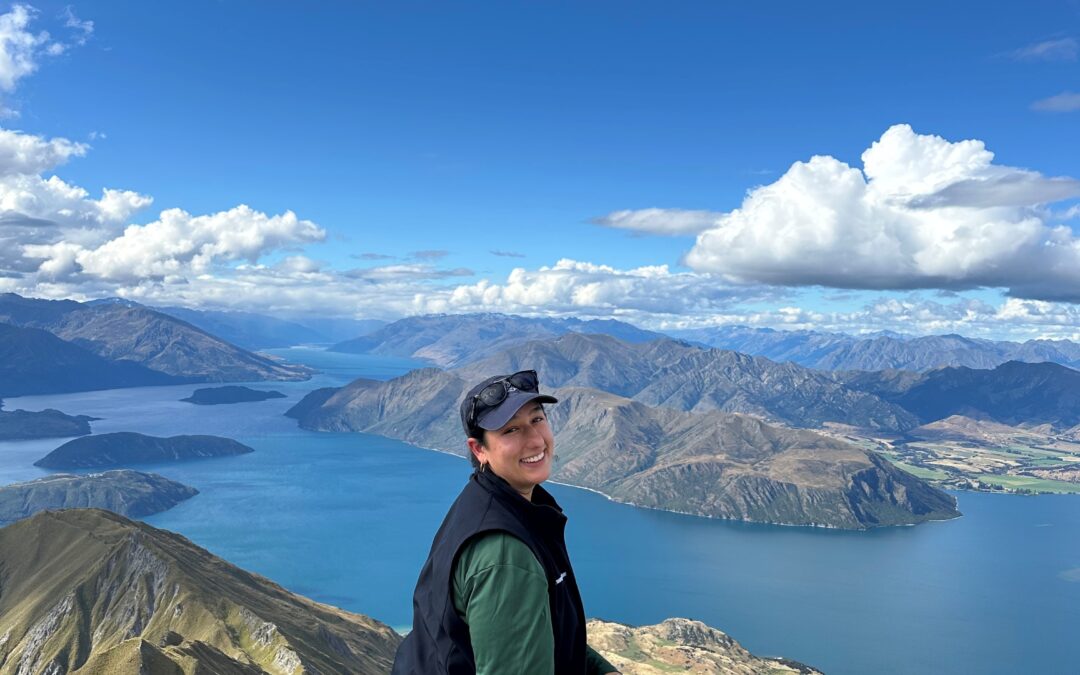
My Story: Yasmin Alamdeen – “Healthcare access is a universal challenge, and there’s so much we can learn from each other.”
By the time US medical student Yasmin Alamdeen arrived in Wairoa early one February morning, the Mobile Surgical Unit was already deployed and locked in place, its trailer expanded outward to double its width. She stepped onto the bus expecting a typical surgical day – dental cases, hernia repairs, scopes – but quickly realised nothing about this experience would be typical. Instead of a hospital corridor, she found herself inside a fully equipped operating theatre built into a truck, one that would carry her the length of both islands over the coming weeks.
Yasmin, a final‑year medical student from Virginia Commonwealth University, came to New Zealand with a clear purpose: to see how another country tackles the challenge of delivering healthcare to rural communities and to gain practical experience. “I additionally wanted to gain experience on how surgical care can be provided in such low-resource, rural areas and how medical treatment can be adapted in those areas,” she says.
As the unit moved from town to town, Yasmin moved with it – joining different clinical teams, learning new rhythms, and getting to know the communities that welcomed them. Between theatre days, she visited the Mobile Health office in Christchurch, where she was handed a Kiwi classic: a pie for morning tea.
“During my time on the road, I really enjoyed Greytown. The patients were absolutely lovely, and the town itself was surprisingly lovely. I would have never known about the town if it weren’t for my time on the unit,” she says.
One of Yasmin’s standout moments came in Rangiora, where she was on board for a milestone: the unit’s 1000th patient. “The team paused to acknowledge the moment and thank the community. It was a small gesture, but meaningful. You could see how much these towns matter to the team. It wasn’t just about providing care – it was about maintaining relationships.”
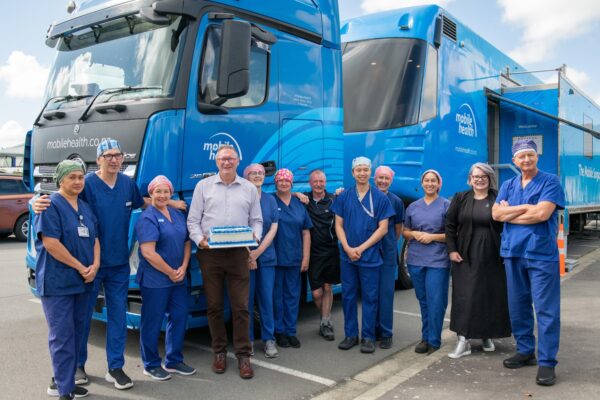
Inside the theatre, Yasmin assisted with a wide range of procedures, from dental extractions to general surgery and gynaecology. She saw how surgical care is adapted in rural settings, where comorbidities, distance, and available support services all influence what can safely be done outside major centres.
One patient in particular stood out: a man who had waited two years for a hernia repair. “He was genuinely excited, not just to finally have the surgery, but to have it on the surgical unit. It reminded me why access matters,” she says.
What struck Yasmin just as much as the clinical work was the team culture. Whether she was with the North Island or the South Island team, she found the same mix of professionalism, humour, and support. “Everyone communicated clearly, supported each other, and made space for me to learn. It didn’t matter that I was new; they brought me in straight away.”
Yasmin adds that her time on the unit strengthened her desire to pursue general surgery, but it also broadened her understanding of what healthcare can look like. “Access challenges exist everywhere. Seeing a solution like this – one that’s practical and community‑focused was incredibly valuable. The surgical unit is an efficient model deeply rooted in the people it serves.”
Looking back, she describes the experience as a lesson in adaptability, teamwork, and the universal challenge of ensuring access to care.
“I think there were two big takeaways for me. One: access to healthcare is a universal problem, and there are many useful and important lessons we can learn from each other around the world; just because the problem seems challenging doesn’t mean we shouldn’t try to fix it, and there is value in learning from creative solutions like mobile surgery units. Second, it is extremely important to invest in your team. The success of any endeavor, medical or otherwise, rests heavily on the team around you.”
Yasmin adds, “My time on the bus was an ode to kindness and collaboration. Every new town, every patient, every team taught me something.”